
Services
Lawn care that holds up to Texas heat.
Mowing, feeding, and weed control on a dependable schedule. Everything a Houston-area lawn needs to stay thick, green, and healthy through every season, handled by one insured local crew.
Mowing & maintenance
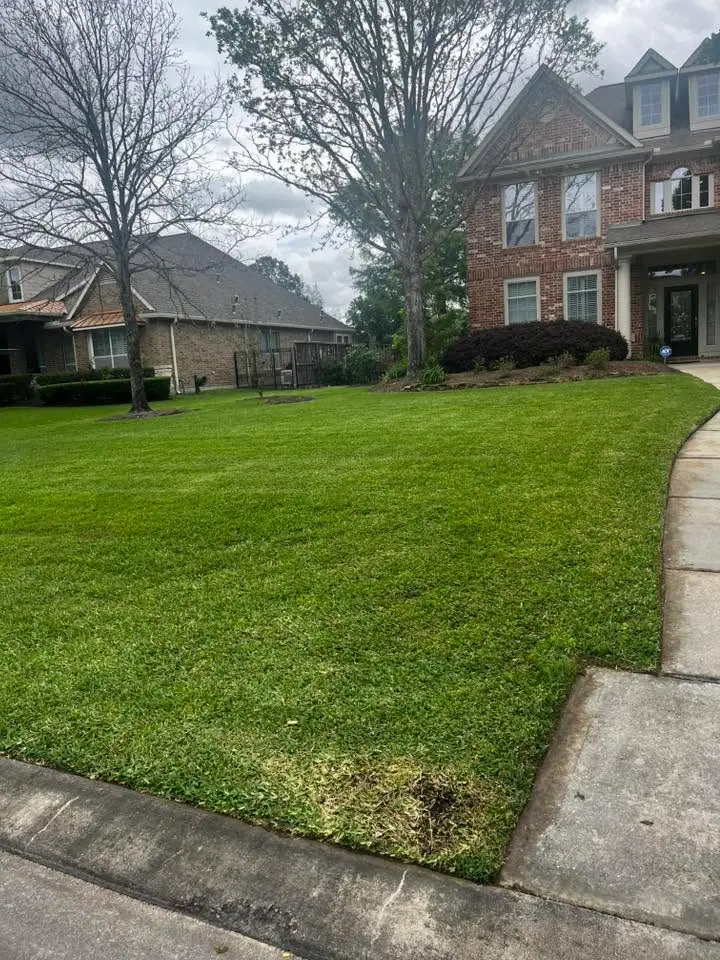
A great Houston lawn starts with correct mowing, and correct means more than short. We cut St. Augustine at three to four inches depending on how much sun the lawn gets, because taller blades shade the soil, hold moisture, and crowd out weeds on their own. Cutting too low is the single most common reason a lawn thins out and lets weeds in.
We follow the one-third rule: never remove more than a third of the blade in a single cut. That is why a consistent schedule matters more than people expect. A lawn that gets skipped for two weeks in June cannot be brought back to height in one pass without shocking it, which is what produces that yellow, scalped look.
Blades stay sharp. A dull blade tears the grass instead of cutting it, and torn tips brown off within a day and give fungus an entry point. Every visit also includes edging along walks, drives, and beds, string trimming around obstacles, and blowing down all hard surfaces so the property is finished, not just cut.
Fertilization & Winterguard treatments
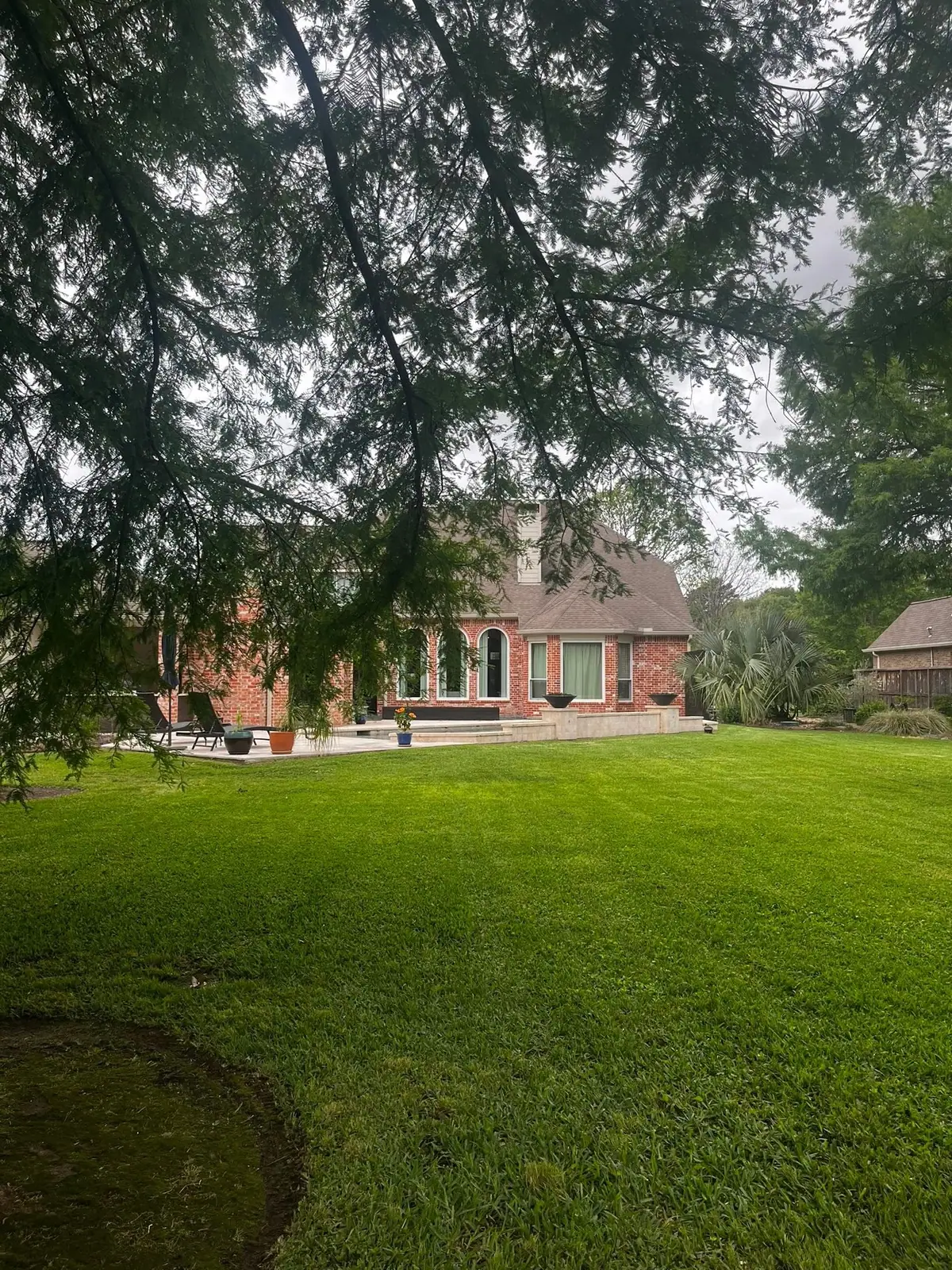
Gulf Coast turf burns through nutrients fast, and feeding it on the right calendar is the difference between deep green and patchy pale. We run a seasonal program matched to your grass type and to what the soil actually needs, rather than putting the same blend down on every property.
Rates change by exposure. A lawn in full sun can use substantially more nitrogen than one under a mature canopy, and over-feeding shaded turf produces weak, leggy growth that invites brown patch and take-all root rot. On properties with both conditions we treat them as two different lawns, because functionally they are.
Before winter, a Winterguard treatment shifts the balance toward potassium instead of nitrogen. Potassium strengthens cell walls and root systems rather than pushing top growth, which is exactly what turf needs going into a cold snap. It helps the lawn survive winter and green up noticeably earlier in spring, and it is the highest-value single application most Houston lawns get all year.
Weed control
Weeds in this climate never take a season off, so we work on two tracks. Pre-emergent applications create a barrier that stops seeds from establishing, and timing is everything: the late-winter application has to go down before soil temperatures reach roughly 55°F and crabgrass germinates. Applied a few weeks late, it does essentially nothing for the season.
Post-emergent treatment handles whatever gets through, and the approach depends on the weed. Crabgrass, dollarweed, clover, nutsedge, and Virginia buttonweed all respond to different products, and several spread by rhizome or tuber rather than seed, which means pre-emergent alone will never hold them.
The real goal is a lawn thick enough to crowd weeds out without much help. Dense, correctly mowed, properly fed turf is the best weed control there is. Treatments are how we get a struggling lawn to that point and keep it there, not a permanent substitute for lawn health.
Lawn care by city
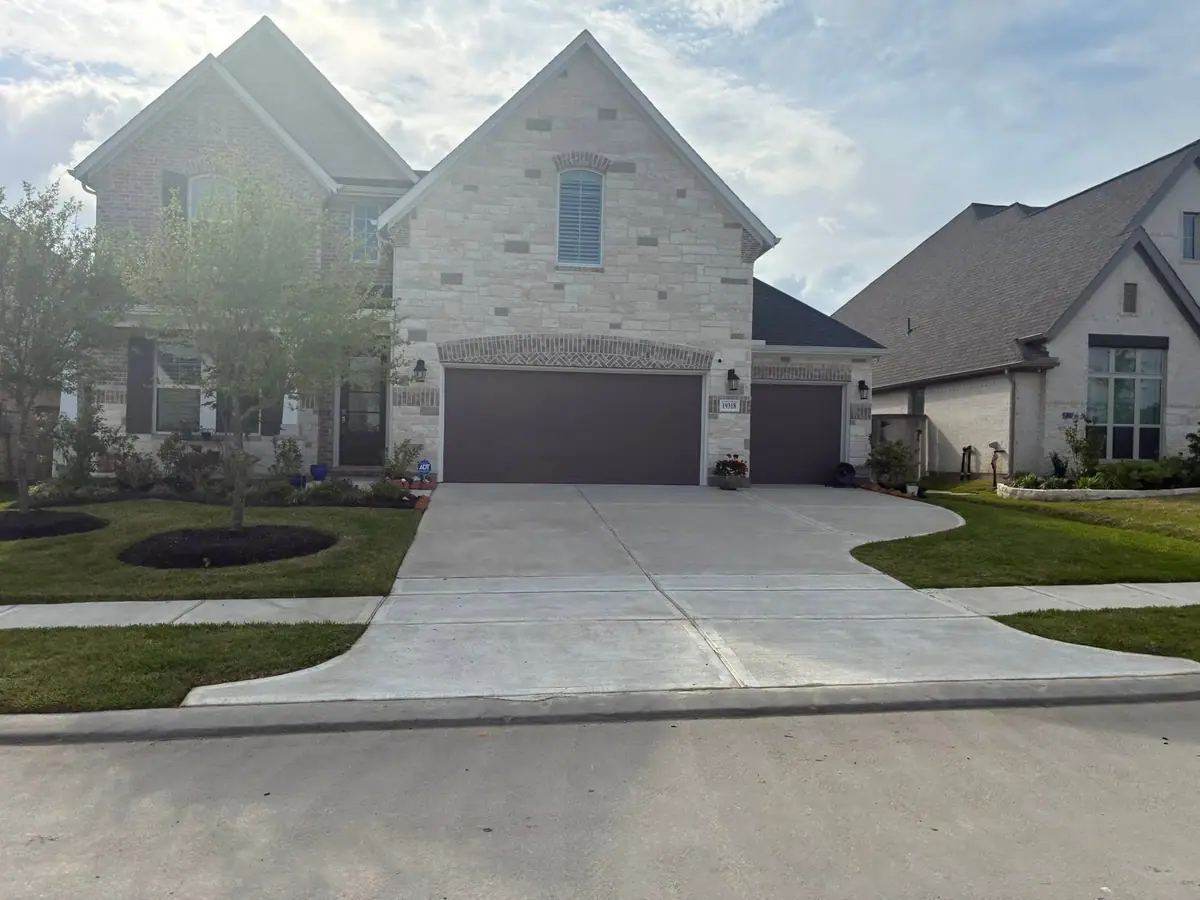
Soil, shade, and lot size change what a lawn needs. These pages cover what we actually run into in each community.
Lawn care questions
- How often should a Houston lawn be mowed?
- Weekly through the growing season, roughly April into October, and every other week in the cooler months. St. Augustine in full sun grows fast enough in early summer that skipping a week means removing more than a third of the blade at the next cut, which stresses the turf.
- What is Winterguard and does my lawn need it?
- It is a late-season feeding weighted toward potassium rather than nitrogen, applied in fall. Potassium strengthens cell walls and root systems, which helps turf survive Gulf Coast cold snaps and green up earlier in spring. For most Houston-area lawns it is the highest-value single application of the year.
- When should pre-emergent be applied in the Houston area?
- Twice a year. Late winter, usually February, before soil temperatures reach about 55°F and crabgrass germinates, and again in early fall for cool-season weeds. Timing matters more than product, because pre-emergent applied after germination does nothing.
- Why does my lawn brown in patches every July?
- Usually shallow roots from compacted soil, chinch bugs in the hot strips along concrete, or both. Watering harder is the common response and it typically makes chinch bug damage worse. It is worth identifying the cause before changing the irrigation schedule.
- Do you require a contract?
- No. We quote the work, you decide, and you can stop at any time. Every estimate is free and given in person after we have actually walked the property.
Want your weekends back?
Get a free in-home estimate for weekly or biweekly lawn care. No contracts, no pricing games.